



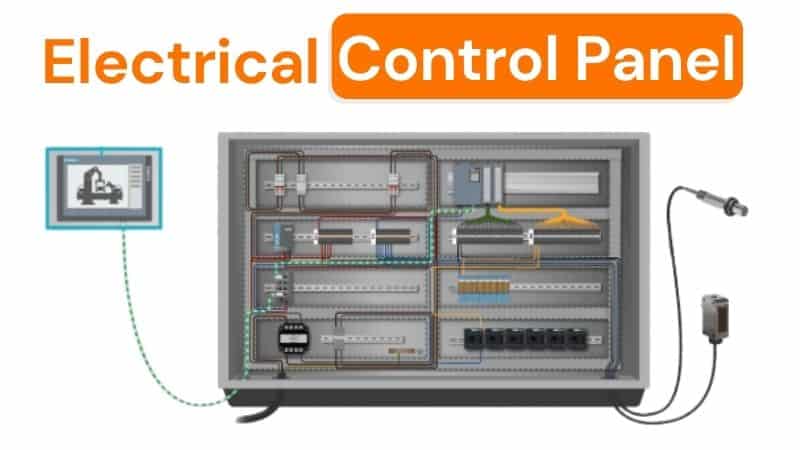
An electrical control panel is an enclosure containing vital electrical components that monitor and control mechanical processes. Essential for industrial operations, panels require strict safety protocols, robust enclosures, and careful management of power distribution, circuit protection, and thermal systems.
An electrical control panel is an enclosure, typically a metal box or plastic molding, which contains important electrical components that control and monitor mechanical processes. These energized systems require ongoing maintenance, planned preventative care, and safe operating procedures. Problems with control panels can cause havoc for business operations and endanger employees, making safe operation and understanding vital for both electrical and non-electrical personnel.
Quick Reference: Core Electrical Control Panel Components
| Component / System | Function & Purpose |
| Enclosures | The physical body protecting internal components from impact, vibration, dust, liquids, and heat. |
| Incoming Protection & Switching | Manages power entry, though incoming connections may remain live even when switched off. |
| Power Distribution Systems | Supplies mains voltage (e.g., 400V three-phase) to heavy plant equipment and lower voltages (e.g., 24V or 110V) to control circuits. |
| Circuit & Load Protection | Circuit breakers and overload devices safeguarding equipment against overcurrent and short circuits. |
| Thermal Management | Manages internal temperatures, preventing overheating in high-density device enclosures. |
| Motion, Drives & Relays | Controls motors, variable frequency drives (VFDs), timers, and contactors to automate industrial processes. |
Key Aspects of Control Panel Design & Safety
1. Enclosures and Thermal Management
An enclosure acts as the barrier between interior electrical hazards and personnel outside. It must withstand harsh environmental conditions like heat, dust, and vibration. Smaller enclosures with high device density pose a greater risk of overheating, making proper sizing and thermal management critical.
2. Power Distribution and Voltages
Control panels handle multiple voltage tiers. Main machinery typically runs on mains voltage (such as 400-volt, three-phase 50 Hz), while field wiring and sensing devices generally operate at lower voltages like 24V (a.c./d.c.) or 110V a.c. Workers must remain cautious, as electric shock, arcing, and short-circuit hazards are always present.
3. Safe Entry and Competency Policies
Due to the severe risks of electrical shock, burns, and flashovers, many companies restrict panel access strictly to competent persons. Safe entry procedures, proper fault-finding training, and clear boundaries for first-line breakdown interventions are essential to protect workers and maintain plant safety.
About TSCA Electrical Group of Company Inc.
Although TSCA was established in 2017, the company is composed of a group of respected engineers and staff with more than 10 years of collective experience in the field of electric and communications engineering, architecture, and civil works. We design, supply, and support advanced electrical control panels and automation systems for industrial and commercial applications.
Contact TSCA Electrical Group today for expert assistance with your control panel requirements, or explore our complete catalog of industrial electrical products and services.