




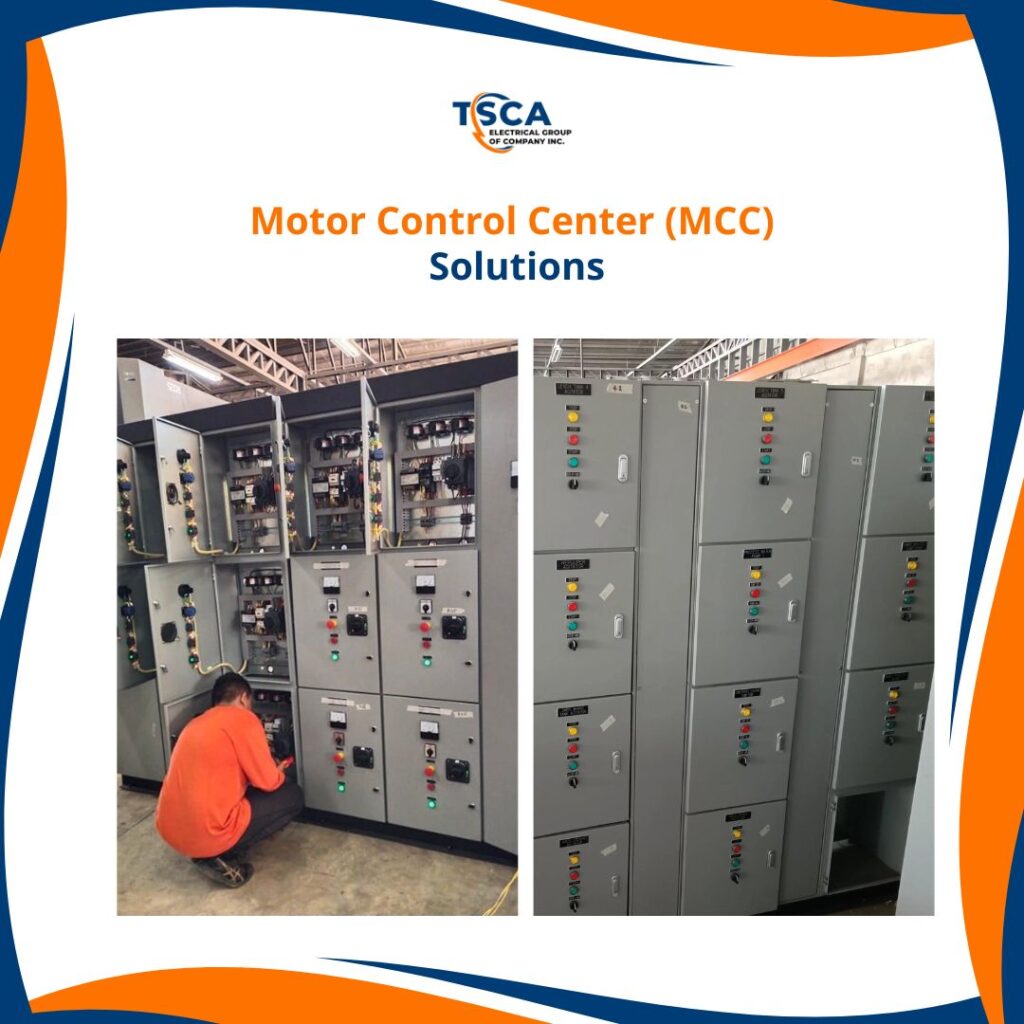
Modern industrial facilities depend on electric motors to operate pumps, fans, compressors, conveyors, production equipment, HVAC systems, and other essential machinery.
When multiple motors need to be controlled and protected from a centralized location, a Motor Control Center (MCC) can provide an organized and scalable solution.
For Philippine manufacturing plants, water and wastewater facilities, commercial buildings, agricultural operations, and other industrial applications, selecting the right Motor Control Center supplier involves more than comparing equipment prices. The MCC must be properly designed for the electrical system, motor loads, operating environment, protection requirements, and applicable Philippine regulations.
This guide explains what an MCC does, what to consider when specifying one, and how to choose an MCC supplier for an industrial facility in the Philippines.
What is a Motor Control Center (MCC)?
A Motor Control Center (MCC) is an assembly that groups motor-control equipment into a centralized electrical enclosure.
An MCC can contain equipment such as:
- Motor starters
- Circuit breakers
- Fuses
- Overload protection
- Disconnecting means
- Contactors
- Variable Frequency Drives (VFDs)
- Soft starters
- Control transformers
- Metering equipment
- Protection and monitoring devices
- Push buttons and indicator lights
- Programmable Logic Controller (PLC) interfaces
Instead of installing individual motor-control equipment throughout a facility, an MCC can organize multiple motor feeders and control circuits into a coordinated assembly.
The exact configuration depends on the application and the electrical design of the facility
How Does an MCC Work?
An MCC receives electrical power from the facility’s distribution system and distributes it to individual motor circuits.
A simplified arrangement can look like this:
Incoming Power → MCC Main Section → Busbar → Motor Feeders → Starters/VFDs → Motors
Each motor feeder can have its own appropriate switching, protection, and control equipment.
Depending on the design, the MCC may also communicate with a building management system, SCADA system, or industrial automation system.
This allows operators and maintenance personnel to monitor and control motor-driven equipment more efficiently.
Why Is the MCC Design Important?
An MCC is part of the facility’s electrical infrastructure. It should therefore be selected based on the actual electrical and operating requirements of the installation.
A properly engineered MCC should consider factors such as:
- System voltage
- Available fault current
- Motor horsepower or kW
- Full-load current
- Starting current
- Number of motors
- Motor starting method
- Short-circuit protection
- Overload protection
- Coordination requirements
- Environmental conditions
- Future expansion
- Available space
- Control and automation requirements
Simply choosing an MCC based on the total motor horsepower is not enough.
MCC Applications in the Philippines
Motor Control Centers can be used in many Philippine facilities.
Common applications include:
Manufacturing Facilities
MCCs can control motors used for:
- Conveyors
- Pumps
- Fans
- Compressors
- Processing equipment
- Material-handling systems
Water and Wastewater Systems
MCCs are commonly used to organize controls for:
- Water pumps
- Booster pumps
- Transfer pumps
- Wastewater pumps
- Aeration equipment
- Blowers
Agricultural and Irrigation Systems
Agricultural operations may use motor-control systems for:
- Irrigation pumps
- Water transfer systems
- Ventilation
- Processing equipment
- Feed systems
Commercial and Industrial Buildings
Motor-control equipment can support:
- HVAC equipment
- Ventilation fans
- Water pumps
- Booster systems
- Mechanical equipment
Mining and Heavy Industrial Operations
MCCs can be designed for demanding environments where motor-driven equipment is essential to production.
The enclosure and equipment selection should reflect the actual environmental conditions of the installation.
Key Benefits of a Motor Control Center
1. Centralized Motor Management
An MCC organizes multiple motor circuits in one location.
This can simplify:
- Operation
- Maintenance
- Troubleshooting
- Circuit identification
- Equipment expansion
Proper labeling and documentation are particularly important in large facilities.
2. Electrical Protection
Motor circuits require appropriate protection against conditions such as overloads and short circuits.
Depending on the design, MCCs can incorporate protective devices and motor-control equipment selected for the specific application.
Protection settings should be properly coordinated with the motor, conductors, equipment, and overall electrical system.
3. Easier Maintenance
A well-designed MCC provides organized access to motor feeders and control equipment.
Depending on the MCC design, features such as segregated sections, withdrawable units, clear labeling, and accessible control components can help maintenance personnel work more efficiently.
Maintenance procedures must still follow the manufacturer’s instructions and applicable electrical safety requirements.
4. Automation and Monitoring
Modern MCCs can integrate with industrial automation systems.
Depending on the project, this may include:
- PLC communication
- Remote monitoring
- Energy metering
- Motor status monitoring
- Fault indication
- VFD control
- Operational data collection
This can help facility operators identify abnormal conditions and improve equipment management.
5. Future Expansion
Industrial facilities often expand over time.
An appropriately designed MCC can provide spare capacity or space for future motor feeders, provided that the original electrical design accounts for the anticipated expansion.
Future capacity should be considered during the initial design rather than assuming that additional loads can always be added later.
What Should You Consider When Choosing an MCC Supplier?
Choosing an MCC supplier should involve more than comparing quotations.
Consider the following factors.
1. Electrical System Requirements
The supplier or engineering team should understand the facility’s electrical system, including:
- Voltage
- Frequency
- Phase configuration
- Motor loads
- Available fault current
- Distribution arrangement
- Protection requirements
The MCC should be compatible with the facility’s electrical design.
2. Motor Load and Starting Requirements
Different motors can have different starting characteristics.
The MCC design may need to accommodate:
- Direct-on-line starters
- Star-delta starters
- Soft starters
- Variable Frequency Drives
- Other motor-control methods
The appropriate starting method depends on the motor, driven equipment, process requirements, and electrical system.
3. Short-Circuit and Protection Requirements
Short-circuit protection is a critical part of MCC design.
The equipment must be suitable for the electrical fault conditions at its installation point.
A qualified electrical engineer should determine the applicable protection and equipment ratings based on the system design and applicable standards.
4. Enclosure and Environmental Conditions
The Philippines has a wide range of operating environments, from air-conditioned commercial facilities to hot, humid, dusty, corrosive, coastal, agricultural, and industrial locations.
The MCC enclosure and internal components should therefore be selected according to the actual installation environment.
Consider:
- Indoor or outdoor installation
- Humidity
- Dust
- Water exposure
- Corrosive environments
- Temperature
- Ventilation
- Accessibility
- Available installation space
The appropriate enclosure rating should be established from the environmental conditions and applicable product standards.
5. Philippine Electrical Compliance
For installations in the Philippines, the electrical design should comply with the applicable edition of the Philippine Electrical Code (PEC) and other applicable Philippine laws, regulations, permits, and local requirements.
Depending on the project, requirements may also involve:
- Philippine electrical licensing requirements
- Building regulations
- Fire-safety requirements
- Occupational safety requirements
- Local government permitting
- Requirements of the applicable electric utility
- Manufacturer requirements
- Applicable equipment/product standards
A crucial distinction is that IEC and NEMA are equipment or industry standards and should not automatically be presented as substitutes for Philippine legal or code requirements.
The specific standards applicable to an MCC should be established during engineering and procurement based on the project specification and applicable Philippine requirements.
IEC vs. NEMA: Which Should You Choose?
IEC and NEMA are both widely recognized approaches to electrical equipment design and motor control, but they are not interchangeable in every application.
Your project specification may require particular equipment standards, ratings, construction methods, or testing procedures.
Instead of choosing an MCC simply because it is “IEC” or “NEMA,” ask the supplier:
- What standard is the MCC designed and tested to?
- What ratings apply to the complete assembly?
- What short-circuit rating is provided?
- What environmental rating is applicable?
- What documentation and test records are supplied?
- Does the design meet the project’s Philippine electrical requirements?
The final specification should be determined by the project’s electrical engineer and applicable requirements.
MCC Components and Options
An MCC can be configured in many ways.
Motor Starters
Motor starters can provide switching and overload protection appropriate to the motor application.
Variable Frequency Drives
VFDs can control motor speed and may help optimize processes where variable-speed operation is appropriate.
Soft Starters
Soft starters can reduce motor starting stress and may be appropriate for certain applications.
Circuit Breakers and Fuses
Protective devices can provide short-circuit and overcurrent protection as required by the electrical design.
PLC Integration
MCC equipment can be integrated with PLC-based automation systems for centralized monitoring and control.
Metering
Electrical meters can provide information about operating conditions and energy consumption.
MCC Installation and Commissioning
A quality MCC installation does not end when the equipment arrives at the facility.
Before energization, the project should include appropriate inspection, testing, documentation, and commissioning procedures.
Depending on the system, commissioning may include verification of:
- Connections
- Identification and labeling
- Protection settings
- Control circuits
- Motor rotation
- Interlocks
- Emergency controls
- Communication systems
- VFD parameters
- PLC interfaces
- Protective devices
- Grounding and bonding
- Insulation condition
Testing should be performed by appropriately qualified personnel using procedures suitable for the equipment and installation.
MCC Maintenance
Regular maintenance helps identify developing problems before they result in unexpected downtime.
Maintenance programs may include:
- Visual inspection
- Cleaning
- Checking for signs of overheating
- Inspection of connections
- Verification of protective devices
- Inspection of contactors and starters
- VFD inspection
- Control-system checks
- Thermographic inspection where appropriate
- Electrical testing where required
- Review of alarms and fault history
Always follow the MCC manufacturer’s maintenance requirements and applicable safety procedures.
Common MCC Problems
Some warning signs that an MCC may require inspection include:
- Unusual noise
- Burning smell
- Excessive heat
- Discoloration
- Repeated breaker trips
- Motor overload trips
- Contactor problems
- VFD faults
- Communication failures
- Loose or damaged components
- Unexpected motor shutdowns
If an MCC shows signs of overheating, arcing, burning, or electrical damage, it should be isolated and inspected by qualified personnel.
Why Choose an Experienced MCC Supplier?
An MCC is more than a metal enclosure containing breakers and motor starters.
The quality of the final system depends on:
Engineering + component selection + fabrication + testing + installation + commissioning + maintenance
An experienced MCC supplier should be able to understand the relationship between the MCC, motors, electrical distribution system, control system, and the facility’s operating requirements.
For projects in the Philippines, local technical support can also be valuable for site coordination, installation, troubleshooting, maintenance, and future modifications.
What Should You Ask an MCC Supplier Before Ordering?
Before selecting an MCC supplier, ask:
- What electrical ratings will the MCC have?
- What motor loads will it control?
- What short-circuit rating is required?
- What motor starting methods will be used?
- What enclosure rating is appropriate?
- Will VFDs or soft starters be included?
- How will the MCC integrate with the PLC or automation system?
- What testing will be performed before delivery?
- What documentation will be provided?
- How will installation and commissioning be handled?
- What maintenance and after-sales support is available?
- Does the proposed design comply with the applicable Philippine requirements?
These questions can help you compare suppliers based on engineering capability rather than price alone.
Frequently Asked Questions About MCCs
What is an MCC used for?
A Motor Control Center is used to organize, control, and protect multiple motor circuits from a centralized assembly.
Where are MCCs commonly used?
MCCs are commonly used in manufacturing plants, water and wastewater facilities, agricultural operations, commercial buildings, industrial facilities, and other installations with multiple motor-driven loads.
Does an MCC control the motors directly?
An MCC houses motor-control equipment such as starters, contactors, overload protection, VFDs, or other devices. The exact control arrangement depends on the electrical and automation design.
Can an MCC include VFDs?
Yes. VFDs can be integrated into an MCC where variable-speed motor operation is required and appropriate for the application.
Does an MCC need to comply with the Philippine Electrical Code?
The electrical installation must comply with the applicable Philippine electrical requirements. The specific MCC design, equipment standards, ratings, and installation requirements should be determined by the project’s qualified electrical professionals.
Should I choose an IEC or NEMA MCC?
There is no universal answer. The appropriate equipment depends on the project specification, application, electrical system, applicable standards, and Philippine requirements.
Can an MCC be customized?
Yes. MCCs can be configured according to the number and type of motors, starting methods, protection requirements, automation system, environmental conditions, available space, and future expansion requirements.
Choosing an MCC Supplier in the Philippines
A reliable Motor Control Center is an important part of an industrial facility’s electrical infrastructure.
The right supplier should be able to provide more than equipment. Look for a partner that can support the project through engineering, panel fabrication, component integration, testing, installation, commissioning, troubleshooting, and maintenance.
For Philippine industrial and commercial facilities, the MCC should be designed around the actual electrical system, operating environment, motor loads, automation requirements, and applicable Philippine regulations and standards.
If your facility needs a Motor Control Center, custom electrical panel, motor control system, pump control panel, or industrial electrical solution, TSCA Electrical Group can help assess your project requirements.
Contact TSCA Electrical Group
📞 (082) 287-8205
✉️ sales@tsca.com.ph | info@tsca.com.ph
📍 Unit 7, San-Ei Trading Building, Diversion Road, Ma-a, Davao City, Philippines
Contact Us | Products | Services | Blog