




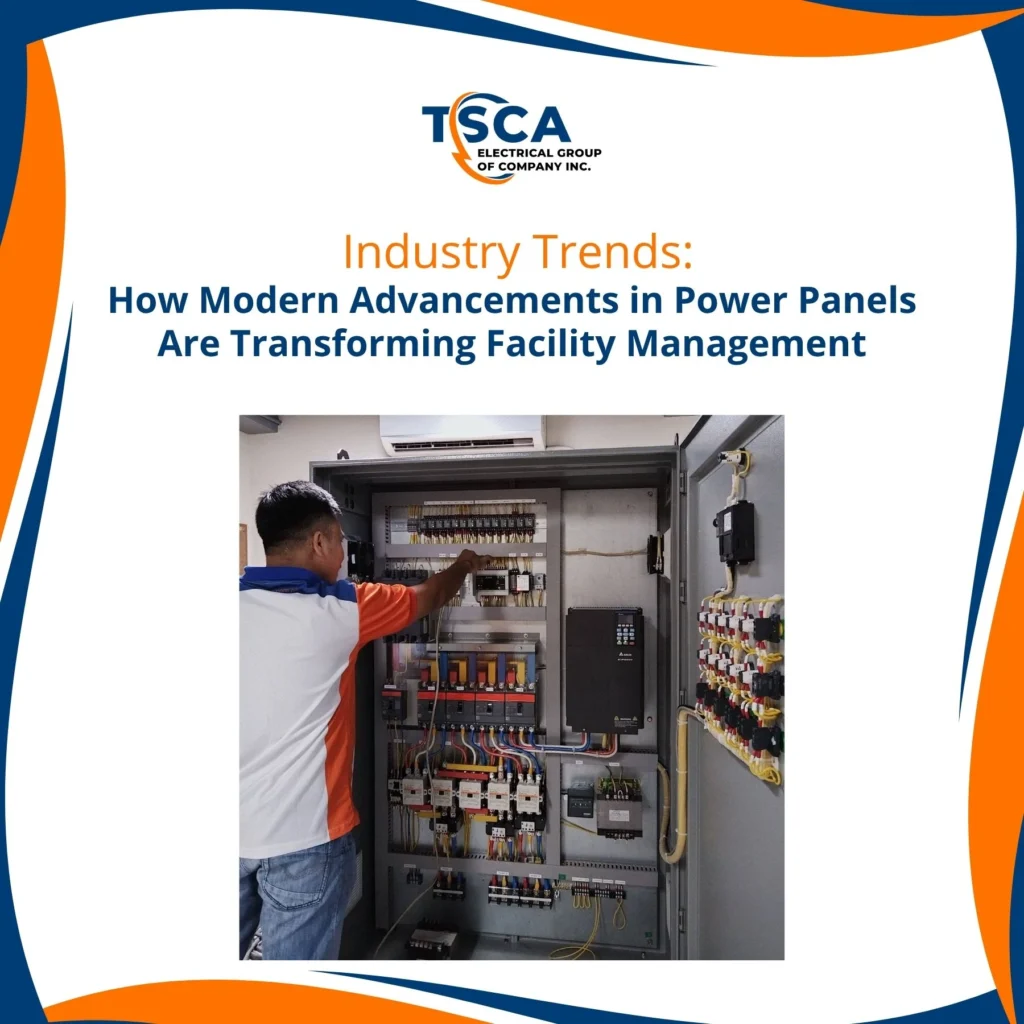
Power distribution panels are no longer passive junction boxes; they have evolved into intelligent, active nodes within a facility’s broader operational ecosystem. As industrial energy demands surge and operational continuity becomes essential, modern power panel design is undergoing a rapid shift toward smart monitoring, enhanced arc-flash safety, and modular scalability.
Here is a look at the key technical trends shaping the future of power panels and energy distribution.
1. Smart Power Panels & Industrial IoT Integration
Traditional power panels only provide basic circuit protection. Modern smart panels incorporate IoT-enabled energy meters, Programmable Logic Controllers (PLCs), and digital power quality analyzers.
- Protocol Support: Advanced systems utilize protocols like Modbus RTU/TCP, BACnet, and Ethernet/IP to seamlessly route real-time telemetry directly to SCADA or Building Management Systems (BMS).
- Predictive Diagnostics: By continuously capturing key metrics—including voltage fluctuations, current imbalances, harmonics, and thermal signatures—facility operators can transition from reactive repair to predictive maintenance, catching component degradation long before a catastrophic trip occurs.
2. Advanced Safety Features: Arc Flash Mitigation & Rapid Response
Safety standards (such as PEC, NEC, and IEC guidelines) continue to enforce stricter requirements for operator protection. Next-generation distribution panels prioritize active and passive safety:
- Arc-Flash Reduction Technologies: Modern switchboards and panelboards feature Arc-Flash Reduction Maintenance Switches (ARMS) and optical arc-detection relays that clear faults in milliseconds, drastically lowering Incident Energy levels ($cal/cm^2$).
- Surge Protection Devices (SPDs): Heavy-duty, integrated Type 1 and Type 2 SPDs safeguard sensitive electronic drives and control circuits against utility grid surges, line noise, and lightning strikes.
3. Renewable Integration & Microgrid Compatibility
With more commercial facilities incorporating solar PV systems, battery energy storage systems (BESS), and backup generators, power panels must manage multidirectional power flow.
- Hybrid Distribution: Modern panels are engineered to handle dynamic switching between grid-tied and islanded modes without interrupting critical operational loads.
- Harmonic Distortion Management: Inverters and variable frequency drives (VFDs) inject non-linear loads into the electrical distribution system. Contemporary power panels integrate active harmonic filters (AHFs) to maintain clean sine waves and preserve overall power factor efficiency.
4. Modular Enclosures & Custom Assembly
Off-the-shelf panel solutions rarely accommodate complex industrial footprints. Modular enclosure architectures (e.g., standardized DIN-rail routing, compartmentalized busbar chambers, and expandable form factors) offer distinct operational benefits:
- Minimal Downtime Upgrades: Modular designs allow engineers to add or swap breaker modules and control relays as facility needs grow without forcing a complete system redesign or lengthy shutdown.
- Protection Ratings: High-grade custom panel fabrication ensures exact compliance with environmental ratings—such as IP65 or NEMA 3R/4X—protecting internal components against dust ingress, moisture, and high ambient heat.
5. Remote Telemetry and Asset Management
Remote accessibility allows engineering teams to monitor multi-site electrical infrastructure without requiring on-site technicians for routine checkups.
Through secure cloud dashboards or dedicated local HMIs (Human-Machine Interfaces), plant engineers can remotely inspect phase logs, review historical trip data, and receive automated alerts via SMS or email when parameters breach safe thresholds.
Need Custom Electrical Fabrication or Panel Upgrades?
Whether you are upgrading an existing facility’s main distribution board (MDB) or designing custom Motor Control Centers (MCC) for a new industrial project, working with an experienced team ensures PEC/IEC compliance, optimal power quality, and operational reliability.
Get in touch with the TSCA Electrical team to discuss your project requirements:
- 📞 Phone: (082) 287 8205
- ✉️ Email: sales@tsca.com.ph / info@tsca.com.ph
- 📍 Office: Unit 7, San-Ei Trading Building, Diversion Road, Ma-a, Philippines