




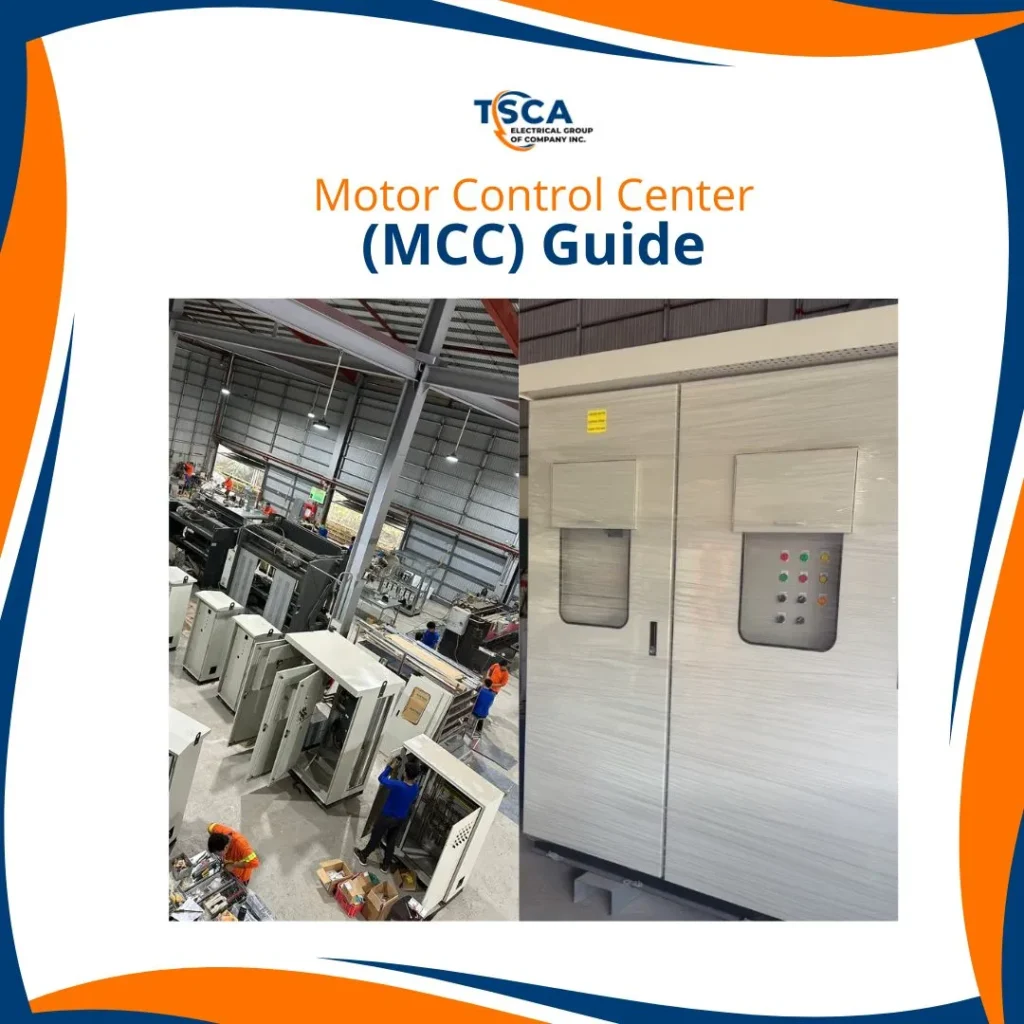
Powering Industrial Efficiency with Reliable MCC Solutions
Modern industrial facilities depend on reliable motor control systems to maintain safe, efficient, and uninterrupted operations. From manufacturing plants and water treatment facilities to agricultural systems and commercial buildings, Motor Control Centers (MCCs) play a critical role in managing electrical motors and automation equipment.
In the Philippines, industries continue to adopt advanced automation and power management systems to improve productivity, reduce downtime, and optimize energy consumption. A properly designed Motor Control Center helps centralize motor operations, improve electrical safety, simplify maintenance, and support future system expansion.
TSCA Electrical Group provides customized Motor Control Center fabrication, installation, troubleshooting, and industrial automation solutions for commercial and industrial applications throughout the Philippines.
What is a Motor Control Center?
A Motor Control Center (MCC) is a centralized electrical assembly used to control, protect, and monitor multiple electric motors within an industrial or commercial facility.
An MCC typically contains:
- motor starters,
- circuit breakers,
- overload relays,
- Variable Frequency Drives (VFDs),
- soft starters,
- busbars,
- programmable logic controllers (PLCs),
- and monitoring devices.
These components are organized inside enclosed sections or compartments to provide efficient motor management and safer electrical distribution.
Motor Control Centers are commonly used in:
- manufacturing plants,
- agricultural facilities,
- pumping stations,
- water treatment systems,
- mining operations,
- and commercial infrastructure.
Main Components of a Motor Control Center
Circuit Breakers
Circuit breakers protect MCC systems from:
- overload,
- short circuit,
- and electrical faults.
They automatically disconnect power when unsafe conditions are detected.
Busbars
Busbars distribute electrical power throughout the MCC system.
They help:
- improve efficiency,
- simplify wiring,
- and support multiple motor connections.
Variable Frequency Drives (VFD)
Variable Frequency Drives regulate motor speed and torque by controlling frequency and voltage.
Benefits include:
- reduced energy consumption,
- smoother motor operation,
- lower mechanical stress,
- and improved process control.
Related Article:
Soft Starters
Soft starters gradually increase motor voltage during startup to reduce:
- mechanical shock,
- electrical stress,
- and inrush current.
They are commonly used in pump systems and heavy industrial equipment.
Related Article:
Motor Starters
Motor starters control motor startup and shutdown while providing overload protection.
Common types include:
- Direct-On-Line (DOL) starters,
- Wye-Delta starters,
- and soft starters.
Related Articles:
PLC Integration
Programmable Logic Controllers (PLCs) automate industrial processes and improve system intelligence.
PLC-integrated MCC systems allow:
- remote monitoring,
- automated sequencing,
- alarm notifications,
- and advanced control strategies.
Types of Motor Control Centers
Conventional MCC
Traditional MCC systems provide centralized motor control using standard starters and protective devices.
Suitable for:
- basic industrial operations,
- commercial facilities,
- and fixed motor applications.
Intelligent MCC
Intelligent MCC systems include:
- digital monitoring,
- communication protocols,
- smart relays,
- and automation integration.
These systems improve:
- diagnostics,
- predictive maintenance,
- and operational visibility.
PLC-Based MCC
PLC-based MCC systems provide automated control for:
- manufacturing,
- process industries,
- and industrial automation systems.
They support:
- programmable operations,
- sensor integration,
- and remote access.
VFD-Controlled MCC
VFD-controlled MCC systems optimize energy efficiency and motor performance.
These are ideal for:
- pump systems,
- HVAC applications,
- conveyors,
- and variable load operations.
Applications of Motor Control Centers
Motor Control Centers are widely used across multiple industries in the Philippines.
Manufacturing Facilities
MCC systems help manufacturing plants:
- automate production lines,
- improve operational efficiency,
- and reduce downtime.
Agricultural Operations
Agricultural facilities in Davao City and throughout the Philippines use MCC systems for:
- irrigation pumps,
- grain processing,
- water distribution,
- and farm automation.
Water Treatment Facilities
MCC systems support:
- pump management,
- filtration systems,
- chemical dosing,
- and automated treatment processes.
Commercial Buildings
Commercial facilities rely on MCC systems for:
- HVAC systems,
- water pumps,
- escalators,
- and emergency backup operations.
Mining and Heavy Industries
Mining operations use MCC systems to manage:
- conveyors,
- crushers,
- ventilation systems,
- and heavy industrial motors.
Benefits of Motor Control Centers
Centralized Motor Management
MCC systems allow operators to control multiple motors from a single location.
This improves:
- operational efficiency,
- monitoring,
- and maintenance accessibility.
Improved Electrical Safety
MCC systems include protective devices that reduce the risk of:
- overload,
- electrical faults,
- and equipment damage.
Reduced Downtime
Modern MCC systems improve troubleshooting and maintenance efficiency, helping facilities reduce unexpected shutdowns.
Energy Efficiency
Integrating VFDs and automation controls helps optimize motor energy consumption.
This lowers:
- operating costs,
- utility expenses,
- and equipment wear.
Scalability
MCC systems can be expanded to support future operational growth.
Additional motor sections and automation devices can be integrated as needed.
MCC vs Traditional Control Panels
| Feature | Motor Control Center | Traditional Control Panel |
|---|---|---|
| Centralized Control | Yes | Limited |
| Scalability | High | Moderate |
| Automation Capability | Advanced | Basic |
| Maintenance Access | Easier | Moderate |
| Energy Optimization | Excellent | Limited |
| Industrial Applications | Extensive | Basic |
Motor Control Centers are better suited for large industrial and commercial operations requiring advanced motor management and automation.
Common MCC Problems and Troubleshooting
Overheating
Possible causes:
- loose connections,
- overloaded circuits,
- poor ventilation,
- or undersized components.
Frequent Overload Trips
This may indicate:
- excessive motor load,
- improper settings,
- or motor failure.
VFD Faults
VFD systems may experience:
- voltage imbalance,
- overheating,
- grounding issues,
- or communication errors.
Corrosion and Moisture
Industrial environments may expose MCC systems to:
- humidity,
- dust,
- and contaminants.
Regular inspection is important.
MCC Preventive Maintenance Checklist
Proper maintenance improves system reliability and extends equipment lifespan.
Recommended Maintenance Tasks
- Thermal scanning inspections
- Tightening terminals and connections
- Cleaning internal components
- Insulation resistance testing
- Relay and breaker inspection
- VFD diagnostics
- Busbar inspection
- Ventilation system cleaning
Preventive maintenance helps minimize:
- downtime,
- unexpected failures,
- and costly repairs.
How to Choose the Right MCC Supplier in the Philippines
Selecting the right MCC supplier is critical for long-term operational reliability.
Important Factors to Consider
Engineering Expertise
Choose a supplier with experience in:
- industrial automation,
- power distribution,
- and motor control systems.
Custom Fabrication Capability
Every facility has unique operational requirements.
A reliable supplier should provide:
- customized designs,
- scalable systems,
- and application-specific solutions.
Technical Support
Reliable after-sales support is essential for:
- troubleshooting,
- preventive maintenance,
- and system upgrades.
Quality Components
High-quality MCC systems use durable:
- breakers,
- relays,
- busbars,
- and control devices.
Industry Experience
Suppliers with industrial project experience understand:
- operational challenges,
- safety standards,
- and facility requirements.
Why Choose TSCA Electrical Group
TSCA Electrical Group provides industrial electrical solutions for commercial, industrial, and agricultural facilities across the Philippines.
Our services include:
- Motor Control Center fabrication,
- industrial automation,
- VFD integration,
- preventive maintenance,
- troubleshooting,
- and electrical system upgrades.
TSCA supports clients with:
- customized solutions,
- experienced technical teams,
- quality workmanship,
- and reliable after-sales support.
We serve industries including:
- manufacturing,
- agriculture,
- water systems,
- commercial facilities,
- and industrial operations.
Frequently Asked Questions
What is the purpose of a Motor Control Center?
A Motor Control Center centralizes the control, protection, and monitoring of electric motors within industrial and commercial facilities.
What industries use MCC systems?
MCC systems are commonly used in:
- manufacturing,
- agriculture,
- mining,
- water treatment,
- and commercial infrastructure.
How often should MCC panels be maintained?
Preventive maintenance is typically recommended every 6 to 12 months depending on operational conditions and equipment usage.
What is the difference between MCC and switchgear?
MCC systems primarily manage motor operations, while switchgear focuses on electrical power distribution and protection.
Can MCC systems include VFDs?
Yes. Modern MCC systems commonly integrate Variable Frequency Drives for improved energy efficiency and motor control.
What is the lifespan of an MCC panel?
A properly maintained MCC panel can last 20 years or more depending on operating conditions and maintenance practices.
Conclusion
Motor Control Centers play a vital role in improving industrial efficiency, electrical safety, automation, and operational reliability. Modern MCC systems help facilities centralize motor management, reduce downtime, optimize energy consumption, and support long-term operational growth.
Businesses in the Philippines continue to invest in advanced motor control and automation technologies to remain competitive and improve productivity.
Looking for reliable Motor Control Center solutions in the Philippines?
TSCA Electrical Group provides customized MCC fabrication, installation, troubleshooting, preventive maintenance, and industrial automation services for commercial and industrial facilities nationwide.