




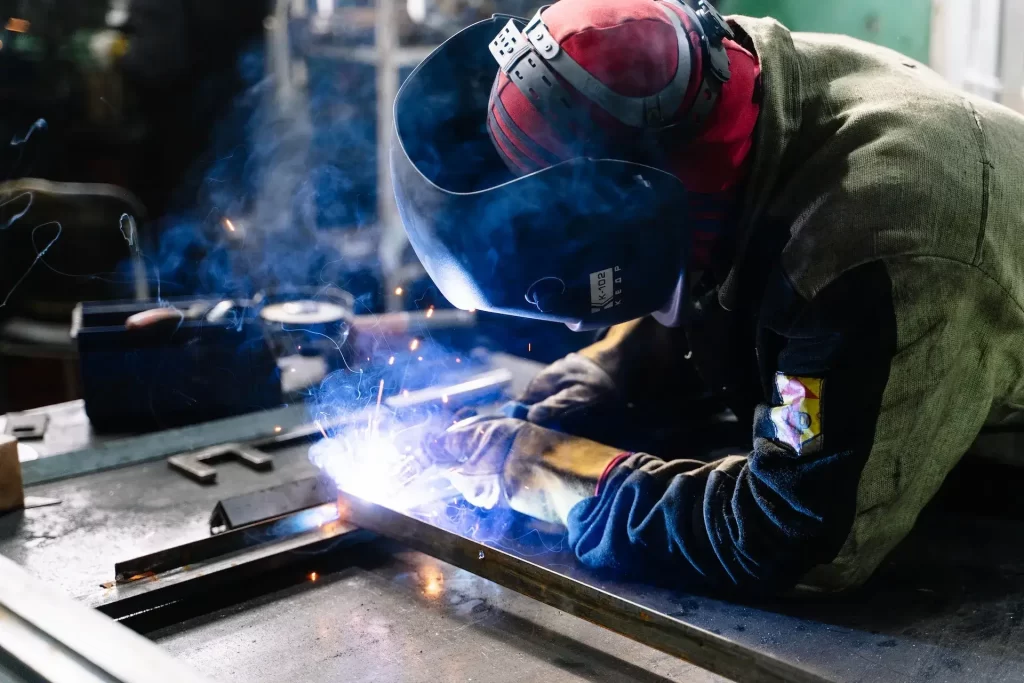
Welding stainless steel depends on material thickness, finish, and the product’s intended purpose. The three most commonly utilized welding methods are TIG (Gas Tungsten Arc) for high quality and thin materials, Resistance (spot) welding for economical production, and MIG (Gas Metal Arc) for complex projects using pulsed currents.
The thickness and finish of the material, as well as the intended purpose of the completed product, influence the stainless steel welding process. While there are various ways to work with stainless steel, three methods are most commonly utilized by professionals: TIG, Resistance, and MIG welding.
Quick Reference: 3 Common Stainless Steel Welding Methods
| Welding Method | Primary Process & Shielding Gas | Best Used For / Key Advantage |
|---|---|---|
| 1. TIG (Gas Tungsten Arc) | Low heat input process using argon gas mixed with helium, hydrogen, or nitrogen. Inert backing gas prevents oxidation. | High quality, longevity, and versatility; perfect for thin stainless steel materials. |
| 2. Resistance / Spot (RW) | Uses an electrical current to heat metal edges and seal them together under pressure. | Economical and exceptionally productive on metals with a low melting point. |
| 3. MIG (Gas Metal Arc) | Uses an argon-rich shielding gas (or mixtures with helium, oxygen, and CO2) and a solid wire electrode. | Enables pulsed current supplies to reach tough spots on complex stainless steel projects. |
Detailed Breakdown of the Methods
1. TIG or Gas Tungsten Arc Welding
Offering high quality, versatility, and longevity, TIG is the most commonly used process for stainless steel. It creates a low heat input, making it ideal for thin materials. Argon gas is often mixed with helium, hydrogen, or nitrogen depending on project needs. To prevent oxidation and increase corrosion resistance, single-sided welding can be used with inert backing gas protection between interior and exterior welds.
2. Resistance or Spot Welding
Resistance or “spot” welding (RW) is one of the most economical types of welding. It uses an electrical current to heat metal edges and seal them together, making it exceptionally productive on metals with a low melting point.
3. MIG or Gas Metal Arc Welding
This process uses an argon-rich shielding gas and a solid wire electrode. MIG is popular because it allows welders to utilize a pulsed current supply, simplifying welds in tough-to-reach spots on complex stainless steel projects. Additional gas mixtures—including those with helium, oxygen, and carbon dioxide—are often used to stabilize the arc and improve weld quality.
Which Stainless Steel Welding Method Is Best?
Choosing the right method depends on your project’s specific requirements:
- Choose Resistance / Spot Welding if you are looking for a more affordable, productive option.
- Choose TIG Welding when working with thin materials requiring high precision and corrosion resistance.
Professional Welding Services with TSCA
Evaluating materials, capabilities, and finishing styles is critical to determining the most effective welding method. With extensive metallurgical knowledge and years of industry experience, TSCA is up to the task of selecting and implementing the best stainless steel welding method for your needs.
Contact TSCA Electrical Group today to get a quote, learn more about our fabrication processes, and get all of the answers you’re looking for, or explore our complete catalog of industrial electrical products and services.